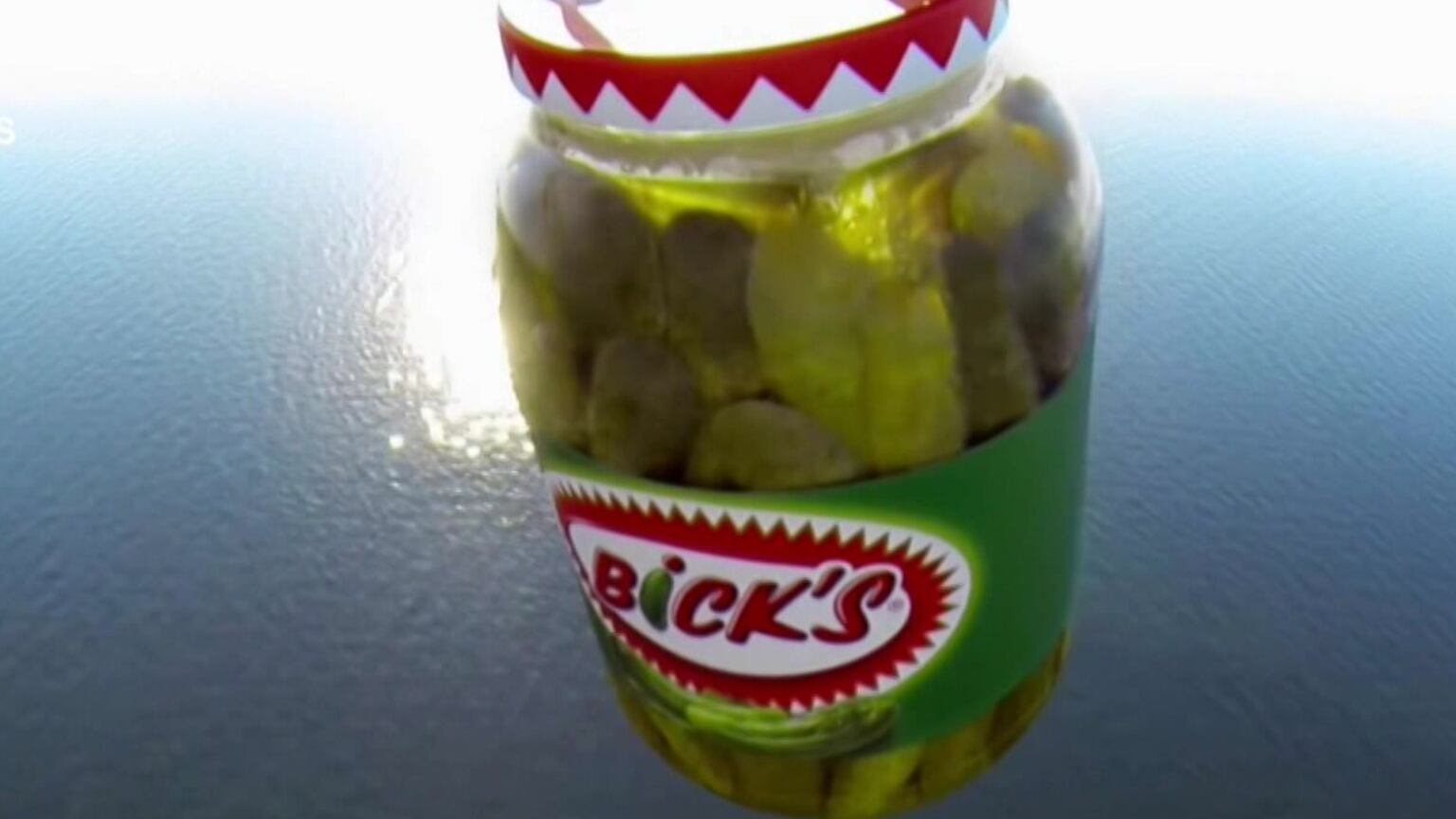
For many Canadians, Bick’s pickles have long been a pantry staple, their tangy crunch elevating burgers, sandwiches, and charcuterie boards alike. However, since June 2025, shoppers have noticed an unsettling absence of Bick’s jars on grocery shelves across the country. The culprit? A complex trade dispute involving retaliatory tariffs between Canada and the United States, which has disrupted the availability of this beloved brand. This pickle predicament is more than a minor inconvenience—it’s a case study in how global trade policies can ripple through supply chains, impacting consumers, retailers, and even Canadian farmers.
The Root of the Issue
Bick’s pickles, while a proudly Canadian brand in heritage, have been owned by U.S.-based TreeHouse Foods since 2014, following an earlier acquisition by Smucker’s in 2011. The brand’s production facility in Toronto was shuttered shortly after, with manufacturing relocated to the United States. Despite this shift, Bick’s maintains strong ties to Canadian agriculture, sourcing approximately 11 million pounds of cucumbers annually from Ontario growers and metal lids from Canadian manufacturers. Under the Canada-United States-Mexico Agreement (CUSMA), these raw materials cross the border tariff-free. However, once processed and packaged in U.S. facilities, the finished Bick’s pickles are classified as American imports upon their return to Canada—and now face a 25% retaliatory tariff imposed by Ottawa.
This tariff stems from a broader trade dispute. In March 2025, the United States imposed tariffs on Canadian goods, prompting Canada to retaliate with counter-tariffs on various products, including cucumbers and gherkins. While intended to protect domestic industries, these tariffs have inadvertently penalised Bick’s, a brand that relies heavily on Canadian inputs but is processed south of the border. The added costs have made it financially challenging for retailers to stock Bick’s, leading some, like Sobeys and Safeway, to delist the product entirely. Signs in Edmonton Safeway stores have cited “tariff impacts” as the reason for the absence, while Sobeys has shifted shelf space to its private-label pickles, which are often imported and carry higher profit margins.
Economic Ripples and Retail Realities
The impact of these tariffs extends beyond empty shelves. With grocery retail margins typically between 2% and 4%, retailers cannot absorb the 25% tariff without passing costs onto consumers or dropping the product altogether. TreeHouse Foods’ CEO, Steven Oakland, noted, “The food business is a low-margin, high-volume business. There isn’t 25% margin to absorb on either side.” As a result, Bick’s sales have reportedly declined by 25% in the past three months, and the company is purchasing fewer cucumbers and lids from Canadian suppliers, threatening jobs in agriculture and manufacturing.
Ironically, Canada’s “Buy Canadian” tariff strategy, meant to bolster domestic producers, is hurting local farmers who supply Bick’s. Food economist Mike von Massow points out that reduced demand for Bick’s could lead to fewer Canadian cucumbers being purchased, undermining the very agricultural sector the tariffs aim to protect. Meanwhile, retailers are pivoting to alternatives like Lakeside, Putters, and Brine&Co—Canadian-made brands that are gaining traction. Social media users on platforms like Reddit have expressed enthusiasm for these options, with comments like, “Lakeside makes tons of great products out of Southwestern Ontario,” and “I tried Brine and it was tasty. They are made in BC.”
A Broader Trade Conundrum
The Bick’s situation highlights a flaw in Canada’s tariff policy, as noted by trade policy expert Werner Antweiler from the University of British Columbia. Under the harmonized system code, a product’s origin is determined by its final processing location, not the source of its components. A jar of Bick’s pickles, made with Canadian cucumbers and lids but packaged in the U.S., is treated as a foreign product. This classification ignores the realities of integrated North American supply chains, where goods often cross borders multiple times before reaching consumers. As Sylvain Charlebois, a food professor at Dalhousie University, argues, “Canada is effectively taxing products made with Canadian cucumbers and Canadian lids solely because they were processed across the border. This is not a protection strategy; it is an economic own goal.”
The broader implications are sobering. Canada’s food supply chains are less flexible than those in the U.S., where importers can quickly pivot to alternative suppliers. Canadian retailers, constrained by scale, face higher costs and fewer options, leading to reduced competition and higher prices. If Bick’s were to exit the Canadian market entirely—a possibility given the economic pressures—it would further erode consumer choice and highlight Canada’s vulnerability in global trade.
